Morning Glory Meaning: Symbolism, Colors, and the Flower That Lives for a Day
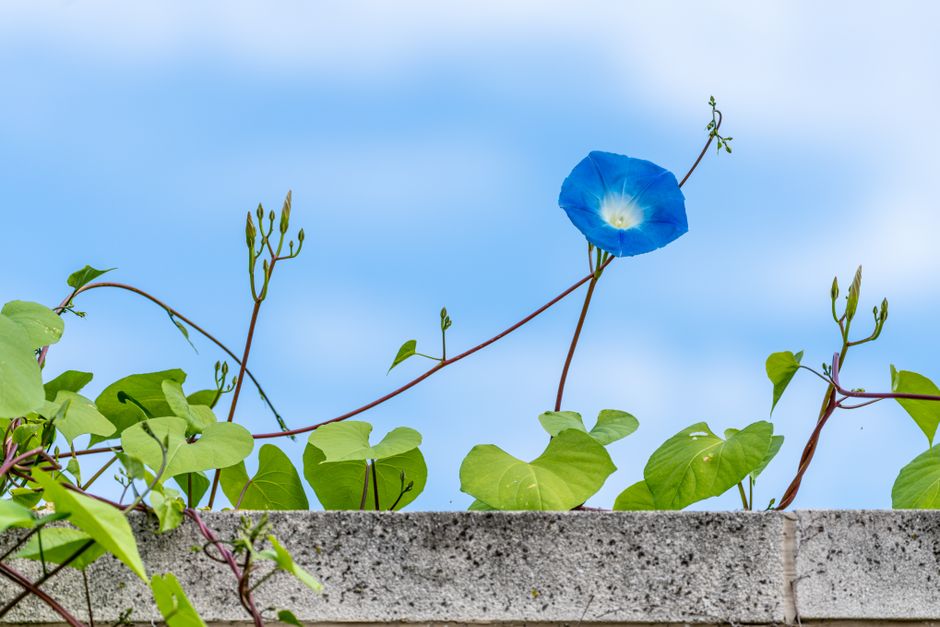
A morning glory opens before most people have finished their first cup of coffee.
By mid-afternoon, that same bloom is a limp twist of tissue paper. One flower, one day, no encore.
The Victorians noticed. In their flower dictionaries, the morning glory was handed one of the bluntest entries in the whole book: love in vain. Affection that unfurls beautifully and then closes before anything comes of it.
But that is only half the story, and frankly the gloomier half. The same vine that drops a flower each afternoon produces a fresh one the next dawn, and the next, and the next, from July until the first hard frost. Georgia O'Keeffe painted them. Monet planted them at Giverny. Mexican healers treated their seeds as sacred.
So the morning glory carries two meanings at once — mortality and relentless renewal — and which one you lean on depends on whether you are looking at the single bloom or the whole vine.
🌸 Flower Profile
| Scientific Name | Ipomoea purpurea, Ipomoea tricolor, and related Ipomoea species |
| Family | Convolvulaceae (the bindweed family) |
| Origin | Central and South America, with Mexico as the center of diversity; now naturalized worldwide |
| Blooming Season | Midsummer through first frost (roughly July to October in temperate zones), with flowers opening at dawn and closing by afternoon |
| Primary Meaning | Love in vain, the brevity of life, and the promise of renewal with each morning |
Color Meanings
Table of Contents
1. Blue
Meaning: Devotion that keeps returning, and the quiet ache of unreciprocated love

💡 At a Glance
Shade Variations: Heavenly Blue — the clear, almost unreal sky blue with a white-and-gold throat. The classic. Reads as pure devotion.
Grandpa Ott — a deep violet-blue with a crimson star in the center, carried to Iowa by a Bavarian immigrant family and the seed that helped launch Seed Savers Exchange. Reads as inherited love, family memory.
Flying Saucers — blue streaked and marbled with white, no two flowers alike. Reads as love that keeps changing shape.
Clark's Heavenly Blue — a slightly earlier-blooming strain. Same meaning, less waiting.
Stems & Styling: Morning glories are terrible cut flowers and excellent cut vines. A snipped bloom collapses within hours, so do not try to build a bouquet of them.
Instead, cut a three-foot length of vine with buds still closed and coil it loosely around the rim of a jar of looser flowers — cosmos, nicotiana, dill flower. The buds will open the next morning right there on the table, which is a far better trick than any florist arrangement.
Stem symbolism: gardeners who follow the old counts use three vines on a trellis for past, present, and future, and a single vine given as a rooted cutting for a love you are willing to wait on.
Pairs beautifully with white clematis and sweet pea, both of which share the climbing habit and the short vase life.
Start with the mechanics, because they explain everything else.
A morning glory bud is a tightly furled spiral. It unwinds in response to light and temperature, usually between four and six in the morning.
By noon the petal tissue has begun to lose turgor. By three, the flower is a damp rag.
The vine does not care. It has thirty more buds queued up.
 This is why the blue morning glory got tangled up in Victorian heartbreak. The Victorians were obsessive about flower codes, and they needed a symbol for the specific misery of loving someone who will not love you back.
A rose was too triumphant. A violet too modest.
The morning glory was perfect — gorgeous, brief, and utterly without consequence. Send someone a morning glory and you were saying: this feeling of mine is beautiful and it is going nowhere.
Then Georgia O'Keeffe got hold of it.
 She painted the blue morning glory in close-up, the way she painted jimsonweed and calla lilies, and something shifted. At that scale the flower stops being a sad little sentiment and becomes architecture — a spiral throat, a radiating star, a structure that looks engineered.
O'Keeffe's morning glories are not about failure. They are about the astonishing amount of design packed into something that will not last the afternoon.
Meanwhile, across the Atlantic, Monet was using them as paint.
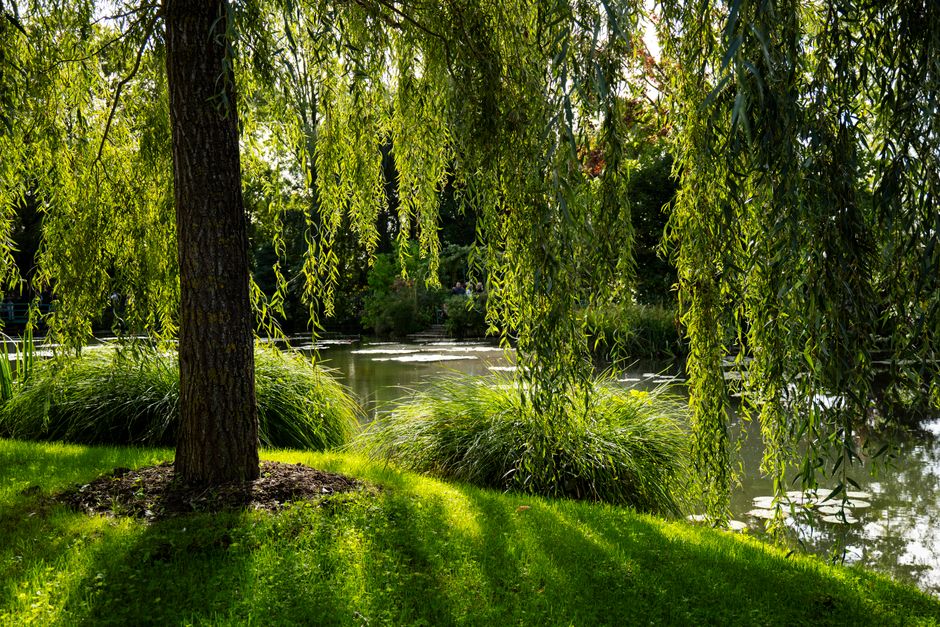 At Giverny he treated morning glories as vertical color, running them up trellises to carry blue into the air above the border. He was not interested in their meaning. He wanted the specific blue they made at seven in the morning when the light came through the petals from behind.
That is the useful thing about the blue morning glory. It holds grief and delight in the same bloom, and you do not have to pick.
Plant it against a fence. Go outside early.
The flower will be gone by the time you get back, and there will be another one tomorrow.
2. Purple
Meaning: Mortality, remembrance, and the dignity of a short life

💡 At a Glance
Shade Variations: Grandpa Ott — royal purple with a red-violet star. The heirloom standard, and the one with the best story attached.
Knowlians Black — so deep it photographs as near-black, opening to dark burgundy-purple. Reads as profound grief, or theatrical drama, depending on your mood.
Star of Yelta — rich purple with a distinct white star and pink veining. Reads as remembrance with light in it.
Lavender and mauve strains — softer, dustier, and much gentler in meaning: nostalgia rather than mourning.
Stems & Styling: For remembrance arrangements, skip the cut bloom entirely and give a seed packet or a rooted cutting instead. The gift is the next season, not this afternoon.
If you want purple morning glory in a sympathy arrangement, use the vine and foliage as a trailing element over the edge of a container, with the buds left on. Pair with white stock, dark scabiosa, and seeded eucalyptus.
Count symbolism: a single purple bloom pressed into a card is a traditional American gesture for a death anniversary — one flower for one day.
Avoid pairing with bright yellow; the contrast reads as cheerful and undercuts the intent.
Walk through any American cemetery laid out before 1900 and you will start seeing them.
A vine carved up the side of a marble marker. Trumpet-shaped flowers, five-pointed, unmistakable.
Morning glory.The carvers were not being decorative. Nineteenth-century funerary art was a language, and every element meant something specific. A broken column meant a life cut short. A lamb meant a child.
And a morning glory meant the flower that lives one day — chosen most often for the youngest graves.
But here is what makes it a better symbol than the broken column.
The morning glory is a vine. Carving it as a vine, climbing, rather than as a single cut bloom, was a deliberate choice.
The individual flower dies. The plant climbs anyway.About two thousand miles west of those cemeteries, in St. Lucas, Iowa, a different purple morning glory was doing something quieter.
Baptist Ott had brought seeds from Bavaria. He grew them. His family saved them, year after year, the way farm families saved everything.
In 1975 his great-granddaughter Diane Ott Whealy had those seeds, and a tomato, and an idea.Seed Savers Exchange grew out of that. Thousands of heirloom varieties preserved, catalogued, and circulated, all tracing back to a handful of flowers a man carried across an ocean because he wanted something from home growing outside his door.
Grandpa Ott's morning glory is still in the catalogue. You can order it.
That is the purple morning glory's real meaning, and it is more interesting than the gravestone version.
Yes, the bloom lasts a day. But the seed lasts generations, and it travels, and it remembers where it came from.
Plant purple morning glory when you want to mark something that mattered.
Then let it go to seed, and give the seed away.
3. White
Meaning: Purity, night-time secrets, and the moon's answer to the sun> 💡 At a Glance
Shade Variations: Pearly Gates — pure white with a faint green throat, day-blooming. Reads as sincerity and new beginnings.
Moonflower (Ipomoea alba) — huge, six-inch, night-opening and strongly fragrant. Reads as secrets, intimacy, and the hidden half of a life.
Milky Way — white with blue-purple radiating streaks along the petal seams. Reads as truth with complications.
Cream and ivory strains — slightly warmer, softer in effect, and conventional in bridal work where pure white would read as cold.
Stems & Styling: This is the one color where cut flowers actually work, because moonflowers open in the evening and hold through the night — exactly when a dinner table or reception needs them.
Cut moonflower vine in late afternoon with fat closed buds. Lay it along the center of a table in shallow water-filled tubes. The buds will open during dinner, which is the single best floral party trick available to amateurs.
Count symbolism: two intertwined vines for a wedding or anniversary, representing two lives on the same trellis. Seven blooms in Victorian practice signified a promise kept.
Pair moonflower with night-scented stock, white nicotiana, and tuberose for a border that does all its work after sunset.
Most flowers make you wait for a time-lapse camera.
The moonflower does not. Stand in front of a fat bud at dusk and you can watch it open with your own eyes.
It takes about two minutes.The bud is a twisted white spindle, roughly the size of a cigar. Around sunset it loosens. The spiral releases.
Then the whole six-inch trumpet flares open, and a scent comes off it that is somewhere between jasmine and almond.
There is a reason for the theatrics. Ipomoea alba is pollinated by hawk moths — great heavy-bodied night fliers with tongues long enough to reach the bottom of that trumpet.
White petals catch moonlight. Strong fragrance travels in still night air. Everything about the flower is tuned to a creature most people never see.Gilded Age Americans understood a good show when they saw one.
Evening gardens became a fixture at Newport cottages and Hudson Valley estates — borders planted entirely in white, positioned for the walk after dinner. Guests were led out at the right hour to watch the moonflowers perform.
It was the nineteenth century's version of pressing play.
Vita Sackville-West made the idea permanent on the other side of the Atlantic.Her White Garden at Sissinghurst, planted in the late 1940s, argued that a garden of nothing but white, silver, and grey was not a gimmick but the most sophisticated thing you could do with a walled enclosure. It is now probably the most imitated garden design in the English-speaking world.
Night-flowering white vines belong to that lineage.
So the white morning glory ends up meaning the opposite of its blue sibling.
The blue one is public, brief, and a little tragic — open at dawn, gone by three. The white moonflower is private, deliberate, and generous with its time.
Plant one of each on the same trellis and you have a vine that is never not in bloom.
Somebody is always awake.
4. Pink
Meaning: Young affection, gentleness, and the beginning of something> 💡 At a Glance
Shade Variations: Carnevale di Venezia — pink and white striped, almost candy-like, each flower patterned differently. Reads as playful, flirtatious affection.
Crimson Rambler — deep rose-pink with a white throat. Reads as affection with real heat behind it.
Scarlett O'Hara — bright rose-red-pink, named for the character and just as vivid. Reads as bold, unmistakable interest.
Field bindweed pink — the small pale wild trumpet. Reads as persistence, for better or worse.
Stems & Styling: Pink morning glory works best in a grow-it-yourself gift: a small trellis in a pot, already planted, with two or three vines started.
Give it in late spring so the recipient gets the whole summer of bloom. This is a far better gesture than a cut arrangement and it costs about a tenth as much.
Count symbolism: one bloom for a first compliment, three for sustained affection, twelve for a full year of it. For a budding romance, three vines on a single support is the traditional choice.
Pair with cosmos, zinnia, and cleome — all easy annuals that bloom on the same schedule and ask nothing of the gardener.
In 1939, American seed catalogues had a problem and a solution in the same season.
The problem was that morning glories were seen as old-fashioned — Grandmother's porch vine. The solution was a new rose-pink cultivar and a very good name.
They called it Scarlett O'Hara.Gone with the Wind hit theaters in December of that year. The flower won an All-America Selections award the same season.
Whether the timing was genius or luck, it worked. You can still buy Scarlett O'Hara morning glory seeds today, which makes it one of the longest-running flower brand tie-ins in horticultural history.
That is the glamorous pink morning glory.
The other pink one is growing through a crack in your driveway right now.Field bindweed — Convolvulus arvensis — is the morning glory's unloved relative. Small pale pink trumpets, white-streaked, perfectly pretty if you did not know better.
Its root system can reach twenty feet down. A fragment of root the size of your fingernail will regenerate a whole plant.
Farmers have been fighting it since Roman agriculture.
And yet.Look at the actual flower and it is lovely — a soft pink funnel, opening with the sun, closing in the heat, exactly like its cultivated cousins. English hedgerow poets wrote about it fondly. Beatrix Potter drew it.
The only difference between a treasured flower and a weed is whether you planted it on purpose.
Which gives pink morning glory its most honest meaning.
Affection that shows up uninvited, keeps coming back, and is genuinely beautiful if you can stop resenting the timing.
Plant the Scarlett O'Hara. Leave the bindweed alone in the back corner.
Both are telling you the same thing.
5. Red
Meaning: Passion on a deadline, and love that burns through the day> 💡 At a Glance
Shade Variations: Cardinal climber (Ipomoea × sloteri) — small scarlet trumpets with finely cut, fern-like leaves. Reads as refined, focused passion.
Red morning glory (Ipomoea coccinea) — slightly orange-scarlet, tiny, abundant. Reads as restless energy.
Cypress vine (Ipomoea quamoclit) — star-shaped crimson flowers on lacy foliage. Reads as passion with delicacy.
Scarlett O'Hara in its deepest expressions crosses from pink into true rose-red. Reads as romance with theatrical flair.
Stems & Styling: Cardinal climber and cypress vine have far better cut life than the large-flowered types, because the individual blooms are small and the foliage is the real event.
Cut lengths of the fern-like vine and use it as a filler in late-summer arrangements. The lacy green does what asparagus fern does, only prettier, and the scarlet flowers read as sparks.
Count symbolism: a single red bloom for a declaration you do not expect to be answered. Five blooms in Victorian practice for a confession made in person.
Pair with dahlias, rudbeckia, and sunflowers — late-summer heat with late-summer heat.
Thomas Jefferson kept lists.
He listed what he planted, when it bloomed, and when it failed. Among the climbers in his Monticello records is cypress vine — Ipomoea quamoclit — scarlet star-shaped flowers on foliage as fine as dill.
He grew it. His granddaughters liked it. The restoration gardeners plant it still.That is a useful thing to know, because it dates the red morning glory's arrival in American gardens to the founding generation.
It was not a Victorian novelty. It was already there.
The cardinal climber, by contrast, is recent and entirely intentional.In the early 1900s a man named Logan Sloter, working in Columbus, Ohio, crossed Ipomoea coccinea with cypress vine. The result combined the better flower of one parent with the better foliage of the other.
Botanists named it after him: Ipomoea × sloteri. Not many amateur hybridizers get a species epithet.
What both plants share is a relationship with birds.Red, tubular, nectar-rich, no scent worth mentioning — that combination is a hummingbird advertisement, and it is the reason these vines sell as well in wildlife catalogues as in ornamental ones. Plant a cardinal climber on a sunny fence in Virginia or Ohio and you will have ruby-throated hummingbirds working it by August.
Which loops back around to the symbolism neatly.
Red morning glory means passion with a deadline. The flower opens hot, works hard, draws what it needs, and is finished by afternoon.
No pining. No long game.
If you want to say something intense and honest about a feeling that has an end date, this is your flower.
Jefferson's granddaughters knew. So did the hummingbirds.
6. Magenta and Violet-Streaked
Meaning: Transformation, altered perception, and knowledge that comes at a cost> 💡 At a Glance
Shade Variations: Grandpa Ott — magenta-purple with a crimson star. The star pattern is the signature of this group.
Star of Yelta — violet-magenta with a sharp white star and dark veining.
Chocolate and Kikyo-zaki types — muted rose and bruised-purple shades with heavy marbling, bred for oddity rather than cheer.
Split Second and double-flowered forms — frilled, ruffled, and thoroughly unlike a wild Ipomoea. Reads as transformation made visible.
Stems & Styling: These are show-off flowers and they belong on a trellis where the star pattern is backlit. Position the vine so morning sun comes through the petals rather than onto them; the star and veining only read properly in transmitted light.
For arrangements, float a single bloom in a shallow bowl of water, face up, where the throat pattern is the entire point. It will last the morning and that is enough.
Count symbolism: nine blooms in older European folk practice for a wish or a question put to fate.
Never include morning glory seeds or seed pods in anything near food, children, or pets.
In 1960, Albert Hofmann was handed some seeds.
Hofmann was the Sandoz chemist who had synthesized LSD in 1938 and discovered its effects, accidentally, in 1943. By 1960 he was studying Mexican ritual plants.
The seeds were morning glory.What he found was that Ipomoea tricolor seeds contain ergoline alkaloids — compounds structurally related to the molecule that had made him famous. A flower sold on every hardware-store seed rack in America shared a chemical family with the defining drug of the coming decade.
Hofmann published. The 1960s did what the 1960s did.
By the middle of the decade, American seed companies were treating morning glory seeds with bitter coatings to discourage people from eating them, which is still standard practice.
But the Aztecs had this figured out four hundred years earlier.In the Florentine Codex, Bernardino de Sahagún's vast sixteenth-century record of Nahua life, the preparation appears under the name ololiuqui. It was used by healers and diviners — people seeking answers, diagnoses, and the location of lost things.
The Spanish clergy went after it hard. You do not bother suppressing something you consider trivial.
So the magenta morning glory sits in a strange position among garden flowers.Most ornamentals have symbolism assigned to them by Victorian dictionary writers who were, frankly, making it up as they went. The morning glory's association with altered vision is not invented. It is documented across four centuries and two continents, by Aztec healers, Spanish friars, and a Swiss chemist.
Which is worth remembering when you look at that star in the throat of the flower.
The pattern is a landing guide for bees. Nothing more.
But it looks exactly like the kind of thing that would mean something, and a great many people across a great deal of history have decided that it does.
Grow it for the color. Leave the seeds in the packet.
Gift Guide by Occasion
1. Housewarming
This is the morning glory's best occasion. Give a packet of Heavenly Blue or Grandpa Ott seeds tied to a small bamboo trellis or a length of jute twine, with a note about which fence gets the morning sun. It costs under ten dollars, it says I expect you to be here next summer, and it will cover an ugly chain-link fence by August. Add a short planting note: nick the seed coat with a nail file, soak overnight, sow after the last frost in poor soil. Rich soil gives you leaves and no flowers.
2. Sympathy and memorials
Skip cut flowers, which collapse in hours and send the wrong message in a sympathy context. Instead give purple morning glory seeds with the gravestone symbolism explained in a line or two — the one-day bloom, the vine that keeps climbing. For a planted memorial, a morning glory on a trellis near a bench works better than a shrub because it does something visible every single morning. Pair with white moonflower if the family would appreciate an evening bloom as well.
3. Summer wedding or anniversary
Use moonflower (Ipomoea alba), not day-blooming types. Cut vine with fat closed buds in the late afternoon and run it down the center of the reception tables in water tubes. The buds open during dinner, visibly, over about two minutes each — guests will notice and talk about it. Two intertwined vines is the traditional count for a couple. For an anniversary gift, a planted pair of vines on one trellis carries the same symbolism and lasts the season.### 4. Graduation
The dawn symbolism does real work here without being saccharine. Give blue morning glory seeds with a line about the vine that puts out a new flower every morning for three months. For a graduate moving into a first apartment with a balcony, pair the seeds with a self-watering pot and a small obelisk trellis — morning glories grow fast enough in containers to give a visible result within six weeks, which matters for a first-time plant owner.
5. Teacher or mentor thank-you
Grandpa Ott morning glory is the specific recommendation, and the story is the gift. Include a note explaining that these seeds came to Iowa with a Bavarian immigrant, were saved by his family for generations, and became the founding variety of Seed Savers Exchange. Passing on something that was carefully kept and handed down is a reasonably exact description of teaching. Order from Seed Savers directly so the packet carries their name.
6. New baby
Use caution and be deliberate. Morning glory seeds are toxic, so do not give loose seed to a household with a crawling child. Instead, give an already-planted pot with the seed packet removed, or plant it yourself in their garden. Blue or white are the right colors here. The meaning — a fresh bloom every single morning for a whole summer — fits new parenthood almost too well.
7. Apology or reconciliation
Morning glory is genuinely good for this and underused. The symbolism of a new flower each morning is close to a built-in message about starting over, and unlike roses it carries no romantic presumption. Give white Pearly Gates seeds or a small planted vine, with one honest sentence. Avoid purple, which reads as mourning, and avoid red, which escalates things in a direction you may not intend.
The Greeks and Romans never wrote about morning glories, because the plant is American and they had never seen one. What they did write about was Clytie — the nymph in Ovid's Metamorphoses who loved the sun god Helios, was abandoned, and sat watching him cross the sky until she rooted in place and turned into a flower that follows the sun. Western garden writers have been attaching that story to sun-tracking flowers ever since, and the morning glory, which opens at the sun's arrival and shuts as it climbs, has absorbed more of it than most.
The documented pre-Columbian tradition is stranger and more specific. In central Mexico, the seeds of Turbina corymbosa and Ipomoea tricolor were a ritual substance called ololiuqui, recorded by Bernardino de Sahagún in the sixteenth-century Florentine Codex and by the Spanish royal physician Francisco Hernández. Healers and diviners used it to find answers; the Church tried to stamp it out. Four centuries later Albert Hofmann, the chemist behind LSD, analyzed the seeds and found related alkaloids — closing a loop between Aztec divination and twentieth-century pharmacology through a hardware-store seed packet.
Europe got the flower in the sixteenth century and promptly domesticated its meaning. Spanish and Italian gardens grew it as campanella, little bell. The Victorians, who turned flower symbolism into a publishing industry, assigned it love in vain and then used it liberally in mourning art, carving morning glory vines on American headstones — especially children's — to signify a life that opened and closed within a single day. Meanwhile the Japanese had been breeding asagao into hundreds of elaborate cultivars since the Edo period, a tradition that quietly supplies many of the odd ruffled and marbled varieties in Western seed catalogues today.
-
Starve them. Rich, fertilized soil produces a monster of foliage with almost no flowers. Poor, lean, slightly dry soil is what triggers heavy blooming. Resist every instinct you have about feeding plants.
-
Nick and soak the seeds. The seed coat is hard. Scratch each seed lightly with a nail file or sandpaper, then soak overnight in warm water before sowing. Germination goes from erratic to reliable.
-
Give them full sun and something to grab. Six or more hours of direct sun, and a trellis, netting, string, or fence. The vines twine counterclockwise and need a thin support — they cannot grip a wide post.
-
Do not try to use the big ones as cut flowers. Large-flowered types collapse within hours of cutting. Instead cut vine lengths with closed buds and let them open in the vase the next morning. Cardinal climber and cypress vine, with their small blooms and lacy foliage, are the exceptions that actually hold.
-
Deadhead or let them seed — pick one. Removing spent flowers extends bloom. Leaving them produces seed pods and volunteers everywhere next spring. In warm climates some Ipomoea species self-sow aggressively enough to be classed as invasive, so check your region before letting them run.
-
Keep the seeds away from children and pets. They contain toxic alkaloids and commercial seed is often treated with fungicides. Store packets out of reach and do not compost seed heads where animals browse.
📌 Quick Summary
-
Blue — Devotion that keeps returning, and the quiet ache of unreciprocated love
-
Purple — Mortality, remembrance, and the dignity of a short life
-
White — Purity, night-time secrets, and the moon's answer to the sun
-
Pink — Young affection, gentleness, and the beginning of something
-
Red — Passion on a deadline, and love that burns through the day
-
Magenta and Violet-Streaked — Transformation, altered perception, and knowledge that comes at a cost
More Flower Meanings
There is a decision buried in the morning glory, and it is worth making consciously.
You can look at the flower, in which case the meaning is loss. One bloom, one morning, finished by three in the afternoon. The Victorians took that reading and the gravestone carvers made it permanent.
Or you can look at the vine, in which case the meaning is stubbornness. Thirty more buds waiting. Ninety mornings in a row, July to frost, every one of them a complete unrepeated performance.
Same plant. Both readings are accurate.
What I like about it is that the morning glory does not let you be sentimental without also being specific. If you want to say I will be here tomorrow, this is a flower that proves it daily and demands you get up early enough to see.
Plant some against the fence that gets the first light. Then make a point of being outside at six.
The flowers are already open, and they have been for an hour, waiting for whoever bothered to show up.


댓글
댓글 쓰기