Lavender Flower Meaning: A Complete Guide to Symbolism, Colors, and the Secret Language of Lavender
The word lavender comes from the Latin lavare, meaning to wash.
Ancient Romans tossed fistfuls of it into their bathwater.
They believed the scent could purify not just the body, but the spirit — scrubbing away invisible stains of grief, anxiety, and bad luck.
That origin story tells you almost everything you need to know about this flower.
Lavender has always been about cleansing and calm.
But its meanings run far deeper than a pleasant bath.
From medieval plague doctors stuffing it into their beaked masks, to Queen Victoria demanding lavender-scented everything in Buckingham Palace, to modern brides tucking sprigs into their bouquets for luck — this humble purple bloom has threaded itself through centuries of human ritual.
The lavender flower meaning shifts depending on its color, its context, and who's giving it to whom.
A single stalk can say I'm thinking of you or I don't fully trust you — sometimes both at once.
Here's what every shade, tradition, and hidden message actually means.
🌸 Flower Profile
| Scientific Name | Lavandula (genus — over 47 species) |
| Family | Lamiaceae (mint family) |
| Origin | Mediterranean region, Middle East, and India |
| Blooming Season | Late spring through summer (June–August in most climates) |
| Primary Meaning | Serenity, devotion, and purification |
Color Meanings
Table of Contents
1. Classic Purple
Meaning: Devotion, royalty, and spiritual calm

💡 At a Glance
Shade Variations: True purple lavender — the classic English lavender (Lavandula angustifolia) — sits right in the middle of the blue-red spectrum.
It reads as balanced and calm.
Blue-purple leans cooler and suggests tranquility and trust.
Red-purple or warmer purple shades carry a slightly more passionate, romantic edge.
The famous Hidcote cultivar produces a particularly saturated, deep purple that reads as more intense and serious than the softer Munstead variety.
Stems & Styling: An odd number of stems is traditional in European bouquets — 7 stems of purple lavender says I'm devoted to you without overwhelming.
Pair with white roses for a classic devotion arrangement.
Or combine with eucalyptus for a modern, textural look that still carries the calming message.
Dried purple lavender bundles tied with twine make an excellent long-lasting gift — the scent holds for months.
Purple lavender is the flower equivalent of a deep breath.
 There's a reason every spa on earth pumps lavender essential oil through its vents.
The scent triggers something primal — a signal to the nervous system that says stand down, you're safe.
But purple lavender wasn't always about relaxation.
In the Middle Ages, it was a weapon against death.
Plague doctors packed their strange bird-like masks with lavender and other aromatics, believing the scent could filter out the poisoned air that carried disease.
 They were wrong about the mechanism — the plague was carried by fleas, not bad smells.
But lavender does have genuine antiseptic properties, so those doctors may have been accidentally protecting themselves in ways they didn't understand.
The Victorian era gave purple lavender its romantic vocabulary.
A young man presenting a small bouquet of purple lavender at a garden party was making a statement: I admire you quietly and steadily.
It wasn't the dramatic declaration of a red rose.
It was the slow burn.
The promise of patience.
 Queen Victoria's obsession with the scent turned it into a symbol of domestic refinement.
If your home smelled of lavender, you were signaling taste, order, and a certain quiet confidence.
That association still holds.
Today, purple lavender remains the default choice when the message is calm devotion — not fireworks, but something more durable.
It's the flower you give when you mean it for the long haul.
2. Deep Violet
Meaning: Luxury, mystery, and spiritual depth

💡 At a Glance
Shade Variations: Near-black violet (like the Hidcote cultivar) reads as solemn, almost gothic.
It's striking in a vase but can feel heavy in large quantities.
Rich plum violet is warmer and slightly more approachable — it suggests luxury without severity.
Dusty violet, where the deep purple is muted with gray undertones, carries a melancholic, vintage feeling, popular in fall wedding palettes.
Stems & Styling: Deep violet lavender works best as an accent, not the star.
Mix 3–5 stems with pale pink peonies or cream garden roses to create contrast without heaviness.
For a dramatic, moody arrangement, pair with burgundy dahlias and dark foliage like smokebush.
This combination reads as sophisticated and a little mysterious — perfect for an evening event or a gift to someone with bold taste.
Deep violet lavender doesn't whisper.
It speaks in a low, certain voice.
 Where classic purple lavender is a lullaby, deep violet is a late-night conversation — the kind where someone finally says what they actually think.
This is the shade that medieval mystics associated with the third eye.
They believed dark purple flowers could sharpen intuition and open channels to spiritual insight.
Monks grew the deepest violet varieties in monastery gardens, using them in meditation and prayer.
 The luxury association is just as old.
When something costs a fortune, we still call it an extravagance fit for royalty — and deep violet is the color that earns that phrase.
In the language of flowers, giving someone deep violet lavender is a compliment with weight.
It says: you are rare, and I recognize it.
Not in a casual, tossed-off way.
In a way that suggests you've been paying attention.
 Modern florists reach for this shade when the occasion calls for something beyond pretty.
A milestone birthday.
A significant promotion.
A retirement after decades of work.
Deep violet lavender marks moments that matter — the ones you don't want to dilute with pastels.
It's also increasingly popular in gothic wedding aesthetics, where couples pair it with black ribbon and moody lighting.
The effect is stunning: dark enough to feel dramatic, but still unmistakably a flower, still unmistakably alive.
3. Blue Lavender
Meaning: Tranquility, trust, and open communication

💡 At a Glance
Shade Variations: True blue lavender is quite rare and typically appears in select cultivars like Lavandula angustifolia 'Blue Cushion' or Lavandula x intermedia 'Phenomenal'.
The color reads as cool, trustworthy, and serene.
Gray-blue lavender, where silver-green foliage influences the overall impression, has a distinctly coastal, Mediterranean feel.
Periwinkle lavender — a blue-violet hybrid shade — is warmer and more playful than true blue, and often used in spring arrangements.
Stems & Styling: Blue lavender pairs beautifully with white daisies or chamomile for a relaxed, cottage-garden feel.
For a more structured arrangement, combine with blue delphinium and silver brunia — the monochromatic blue palette reads as deeply calming.
5 stems in a simple glass jar on a bedside table is one of the most effective sleep aids in the floral world.
No arrangement needed — just stems in water.
Blue lavender is the quietest member of the family.
 It doesn't demand attention the way deep violet does.
It doesn't carry the romantic charge of classic purple.
Instead, it does something harder to describe and harder to achieve: it makes a space feel still.
The ancient Greeks associated blue with truth-telling.
Their word for blue, kyanos, is the root of our word cyan — and they believed blue spaces encouraged honest speech.
 Blue lavender inherits that legacy.
Giving someone blue-toned lavender is less about romance and more about trust.
It says: I feel safe with you.
I can be honest here.
That makes it an unexpectedly powerful choice for friendships.
Not every flower gift needs to be romantic.
Sometimes the most meaningful bouquet is the one that says I see you clearly, and I'm still here.
In garden design, blue lavender has become the go-to for creating meditation spaces.
Landscape architects plant it along paths specifically because the color and scent together create a sensory cue: slow down.
Walk a lavender-lined path at dusk, when the blue tones deepen and the scent rises in the cooling air, and you'll understand why the Romans considered this plant sacred.
Some experiences don't need a scientific explanation.
They just work.
4. Pink Lavender
Meaning: Femininity, grace, and gentle affection
💡 At a Glance
Shade Variations: Dusty pink lavender — the classic Rosea shade — is muted and vintage-feeling.
It pairs well with antique aesthetics and cottage garden styles.
Mauve pink, where purple and pink overlap, reads as more sophisticated and slightly melancholic.
Bright pink lavender is rarer but exists in some hybrid cultivars — it's cheerful and modern, breaking from the traditional lavender palette entirely.
Stems & Styling: Pink lavender is a bridesmaid bouquet star.
Combine with garden roses, ranunculus, and dusty miller foliage for a soft, romantic arrangement.
9 stems wrapped in blush ribbon makes a thoughtful gift for a new mother — the color is gentle, and the calming scent is a genuine help during the sleepless early weeks.
For a baby shower centerpiece, mix pink lavender with white sweet peas and trailing ivy.
Pink lavender feels like a secret.
Most people don't even know lavender comes in pink.
When they see it for the first time, there's almost always a moment of surprise — a double-take, a smile, a quiet "wait, is that real?"
It is real.
And that element of surprise is part of its charm.
Giving pink lavender is a way of saying: I pay attention to the details.
I didn't just grab the obvious choice.
I found something rarer, something softer, something that matches the specific shade of who you are.
The Victorians would have appreciated that precision.
Their entire flower language was built on nuance — the difference between a red rose (passion) and a dark red rose (mourning) could change the entire message.
Pink lavender occupied the tender middle ground: affection without intensity.
It was the flower you sent to someone you cared about gently.
Not with urgency.
Not with demands.
Just with warmth.
In modern use, pink lavender has become closely associated with self-care culture.
The dusty pink tone reads as nurturing, and combined with lavender's documented calming properties, it's become a visual shorthand for permission to rest.
Bath products, candles, bedroom décor — the pink lavender aesthetic is everywhere.
And unlike some trends, this one has roots that go back centuries.
Madame de Pompadour would recognize it instantly.
5. White Lavender
Meaning: Purity, peace, and new beginnings
💡 At a Glance
Shade Variations: Pure white Alba lavender is bright and clean, especially striking against the plant's silver-green foliage.
Ivory white — a slightly warmer, creamier tone — appears in some hybrid varieties and reads as softer and more vintage.
Icy white with blue-green foliage creates a particularly ethereal, almost ghostly effect in garden settings and moonlit arrangements.
Stems & Styling: White lavender is stunning on its own — a single variety bouquet of 12–15 stems in a clear glass vase is architectural and modern.
For weddings, combine with white ranunculus and olive branches for a Mediterranean-inspired bridal bouquet.
The fragrance is identical to purple lavender, so white Alba works perfectly in sachets and potpourri where the scent matters more than the color.
It's also an excellent choice for sympathy arrangements — gentle, fragrant, and not as somber as traditional white lilies.
White lavender is the silence between notes.
Musicians know that the pauses matter as much as the sounds.
White lavender works the same way in a garden or an arrangement — it's the space where the eye can rest.
But calling it a blank would be a mistake.
White lavender carries all the fragrance and all the botanical complexity of its purple relatives.
It's fully itself.
It simply chose a different costume.
Vita Sackville-West understood this.
Her White Garden at Sissinghurst wasn't about absence — it was about concentration.
By removing the distraction of color, she forced visitors to notice form, texture, and scent.
White lavender was essential to that project.
Its spiky architecture and silver-green leaves provided structure, while its scent rewarded anyone who leaned in close.
In the language of flowers, white lavender speaks to fresh starts.
It's the flower you bring to a new home.
The flower you plant after a difficult year.
The flower that says: whatever came before, this is clean ground now.
There's nothing heavy about it.
No complicated subtext.
Just an open door and the scent of something good.
6. Pale Lilac
Meaning: Enchantment, first love, and youthful innocence
💡 At a Glance
Shade Variations: Baby lilac is the palest version — almost white with just a blush of purple.
It reads as innocent and delicate.
True lilac has more confident purple presence while remaining soft and approachable.
Dusty lilac — muted with gray — carries a more nostalgic, bittersweet quality.
It's the shade that says I remember when rather than I'm feeling this now.
Stems & Styling: Pale lilac lavender works beautifully in mixed pastel arrangements — combine with pale yellow freesia, soft peach roses, and white stock for a springtime palette.
A small nosegay of 5–7 stems tied with a simple satin ribbon makes a perfect first-date gift — it's romantic without being aggressive.
For a graduation gift, pair pale lilac lavender with greenery and a handwritten note.
The message: this is just the beginning.
Pale lilac lavender is the color of an almost.
Almost purple.
Almost grown.
Almost brave enough to say what it means.
That in-between quality is exactly what makes it so resonant as a symbol of first love and young enchantment.
First love is, by definition, incomplete.
It's the rehearsal before the performance.
The Romantic poets built entire literary movements around that incompleteness — the idea that the reaching matters more than the grasping.
When William Henry Perkin spilled his failed quinine experiment in 1856 and noticed the pale purple stain on his cloth, he didn't know he was about to change fashion history.
But mauveine — his accidental dye — became the first commercially produced synthetic color.
And the shade it captured was exactly this: pale lilac, the color of lavender at dawn.
Europe went mad for it.
Empress Eugénie wore it.
Queen Victoria wore it.
Every milliner and dressmaker in London scrambled to stock it.
Today, pale lilac lavender carries that same energy of delightful discovery.
It's the color you notice when you're paying attention — not bold enough to shout, but impossible to forget once you've seen it.
Give it to someone at the beginning of something.
A new relationship.
A new chapter.
A new version of themselves.
The message is simple and sweet: this is just starting, and look how beautiful it already is.
Gift Guide by Occasion
1. Wedding
Lavender is one of the most versatile wedding flowers available. Use classic purple for the ceremony arrangements to set a calm, devoted tone. Pink Rosea works beautifully in bridesmaid bouquets. White Alba is perfect for an all-white bridal bouquet with added fragrance. Tuck dried lavender into invitation envelopes for a scented first impression. For the exit toss, dried lavender buds are a fragrant, biodegradable alternative to rice or confetti.
2. Sympathy and Funerals
White lavender is the strongest choice here — it carries the peace and purity associations of traditional sympathy flowers without the heavy formality of white lilies. A simple bundle of dried white lavender with a handwritten card feels personal and gentle. The calming scent is genuinely comforting in a grieving home. Avoid deep violet for sympathy — it can read as too intense for a raw moment.
3. New Baby or Baby Shower
Pink lavender for a girl, pale lilac for a gender-neutral gift, or classic purple if the parents prefer not to gender-code. A small potted lavender plant is a practical gift — the parents can keep it on a windowsill, and the scent genuinely helps with infant sleep. Pair with a soft blanket or onesie for a complete gift.
4. Housewarming
A potted lavender plant is the ideal housewarming gift. It's alive, it's useful (cooking, sachets, aromatherapy), and it symbolizes peace and purification — exactly what you want for a new space. Choose English lavender for indoor growing or French lavender if the recipient has a garden. Add a small card explaining the symbolism: a new home blessed with calm.
5. Get Well or Hospital Visit
Blue-toned lavender is the best choice for someone recovering. The calming scent has documented anxiety-reducing effects, and the color reads as soothing without being somber. Bring a small sachet of dried lavender rather than a cut bouquet — many hospitals restrict fresh flowers in patient rooms, but a sachet tucked under a pillow is allowed and genuinely helpful for rest.
6. Anniversary
For a milestone anniversary, deep violet lavender paired with the partner's favorite flowers makes a sophisticated statement. The symbolism of enduring devotion is built right in. For a simple, everyday anniversary gesture, a single stem of classic purple lavender on a breakfast tray says everything without a word.
7. Graduation
Pale lilac lavender is perfect for graduation — it symbolizes new beginnings and youthful potential. Combine with bright greenery to suggest growth ahead. A dried lavender bundle with a ribbon in the school colors is a thoughtful, lasting keepsake that won't wilt during the long ceremony.
The Mediterranean Cradle
Lavender's cultural story begins on the rocky hillsides of the Mediterranean, where it grew wild for millennia before anyone thought to cultivate it.
The ancient Egyptians used lavender in their mummification process — traces of it have been found in pharaonic tombs, including, according to some accounts, the tomb of Tutankhamun.
They valued it for its preservative qualities and its association with the afterlife.
The Romans scaled up lavender's role dramatically.
They used it in cooking, bathing, cleaning, and medicine.
Roman soldiers carried lavender with them on campaigns, using it to dress wounds and scent their quarters.
The flower followed the legions across Europe, taking root in the soils of Gaul, Hispania, and Britannia.
The Christian Thread
Christian tradition wove lavender into the story of the Holy Family.
One legend holds that the Virgin Mary dried the infant Jesus's clothes on a lavender bush, and that the plant's scent is a lingering trace of that sacred contact.
Another tradition claims that lavender was one of the herbs gathered from the Garden of Gethsemane.
These stories — whether literally believed or not — embedded lavender deeply into European Christian culture.
Monasteries across medieval Europe grew lavender in their physic gardens, using it in healing remedies and religious ceremonies.
The association between lavender and spiritual purity persists in church traditions today.
Provence and the Modern Icon
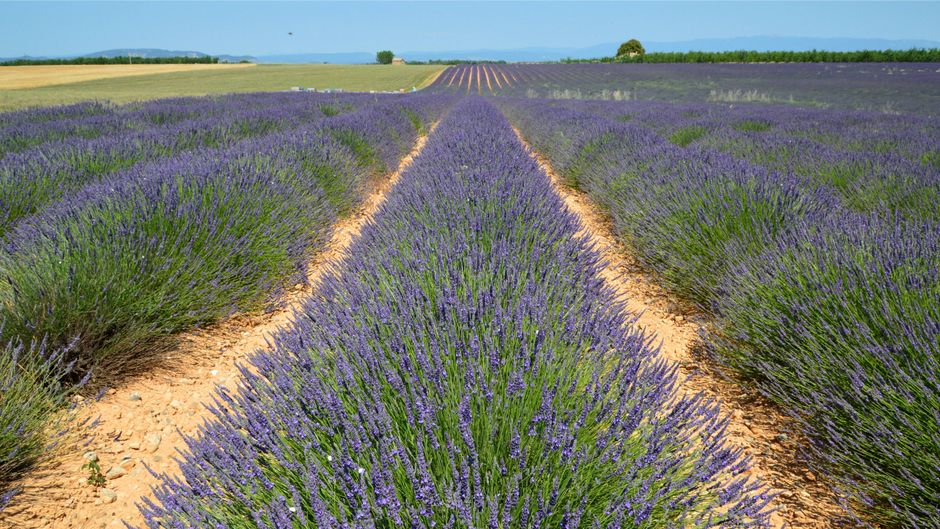
The lavender fields of Provence have become one of the most recognizable landscapes on Earth.
Cistercian monks began cultivating lavender in southern France during the 12th century, and by the 19th century, the region's lavender industry was a major economic force.
Today, Provence produces roughly 50 tons of lavender essential oil per year.
The annual lavender harvest — la récolte — is still a cultural event, drawing tourists from around the world.
The image of endless purple rows under a blazing blue sky has become synonymous with the romantic ideal of rural France.
It's a symbol that transcends the flower itself, standing for simplicity, beauty, and a life lived at a slower pace.
-
Cut stems at the right moment — harvest or trim lavender when about half the flowers on the spike have opened. This gives you the longest vase life and the strongest scent.
-
Keep it cool and dry — lavender hates humidity. Place arrangements away from kitchens and bathrooms. A sunny, well-ventilated spot is ideal.
-
Change water every two days for fresh lavender. Use cool water without flower food — lavender doesn't respond well to the sugar-based preservatives that work for roses.
-
Dry it upside down — when fresh lavender starts to fade, bundle 15–20 stems with a rubber band and hang them upside down in a dark, dry space. They'll dry perfectly in 2–3 weeks and retain their scent for months.
-
Strip lower leaves before arranging — any foliage below the waterline will rot and cloud the water, shortening the life of the arrangement.
-
Revive wilted stems by recutting at a 45-degree angle and placing in fresh cool water for a few hours. Lavender is surprisingly resilient and often perks back up.
📌 Quick Summary
-
Classic Purple — Devotion, royalty, and spiritual calm
-
Deep Violet — Luxury, mystery, and spiritual depth
-
Blue Lavender — Tranquility, trust, and open communication
-
Pink Lavender — Femininity, grace, and gentle affection
-
White Lavender — Purity, peace, and new beginnings
-
Pale Lilac — Enchantment, first love, and youthful innocence
Lavender is the rare flower that earns its reputation.
Not through showiness — there are bigger, bolder, more dramatic blooms.
But through consistency.
It calms.
It endures.
It carries meaning without making a fuss about it.
The Romans knew.
The monks knew.
Queen Victoria knew.
And now, standing in a garden or holding a single sprig to your nose, you know too.
Some flowers demand attention.
Lavender simply deserves it.


댓글
댓글 쓰기